 Sardines
Do Sardines Have Arsenic? The Actual Numbers
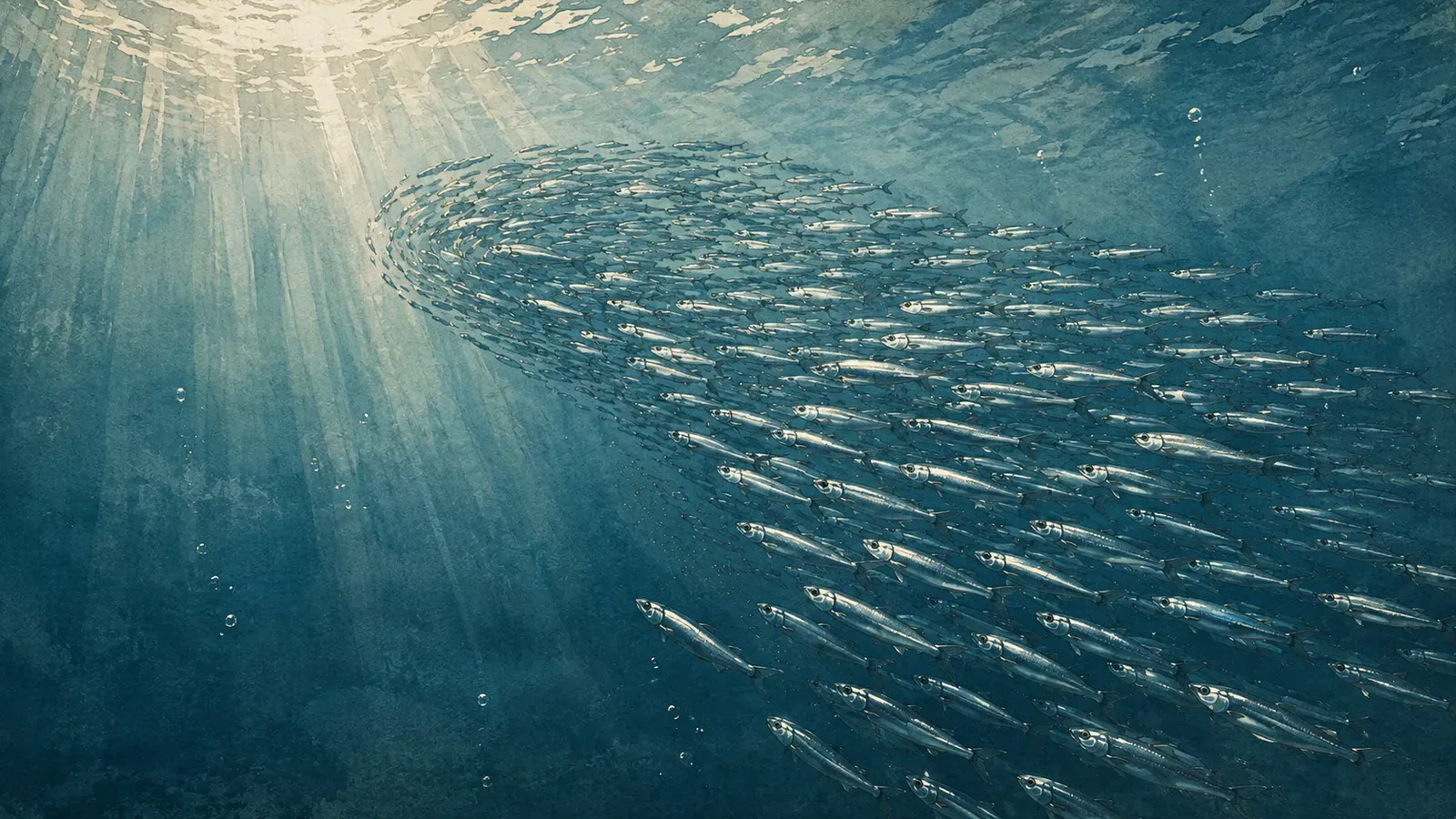
Here's the straight answer: yes, sardines contain arsenic, and so does every other fish in the sea. But the word does more damage than the metal. Almost all of it, more than 90%, is arsenobetaine, an organic form your body treats as inert and flushes out in a day or two. The genuinely toxic kind, inorganic arsenic, is a small slice of the total and sits very low in a small, short-lived fish like the sardine. On the metal everyone actually fears, mercury, sardines are near the bottom of the whole ocean. Here are the measured numbers.
This is editorial, sourced below, not medical advice. If you have a specific health condition, your doctor outranks any article, including this one.
The number that scared everyone
The question spiked in late July 2026 when Joe Rogan said on his show that a blood test had flagged elevated arsenic, and he blamed a heavy daily tinned-fish habit. It is a real thing that can happen on a lab report, and it is also almost always misread. A test taken after a seafood meal picks up total arsenic — and total arsenic in fish is dominated by the harmless organic form. A high number on that line is a sign you ate fish, not a sign you were poisoned. The distinction is the whole story, so it is worth getting right.
Two kinds of arsenic
Arsenic comes in two families that behave almost nothing alike.
Inorganic arsenic is the toxic one — the version tied to contaminated groundwater, certain rice, and long-term health risk. This is what safety limits are written for.
Organic arsenic, in fish overwhelmingly arsenobetaine, is a different animal. Dartmouth's toxicology group describes it plainly as "not harmful to humans," and the body is efficient at clearing it: arsenobetaine passes through and leaves in urine within roughly a day or two, with no toxic buildup. In marine fish the toxic inorganic fraction is typically under 10% of the total, and for a small plankton-eater like the sardine it usually lands in the low single digits. So when a tin tests at, say, 1.5 mg/kg total arsenic, the part that matters is a few hundredths of a milligram.
The actual numbers
Here is what independent testing actually finds in a tin of sardines, next to the reference limits regulators use.
| In a tin of sardines | Typical measured level | Reference limit (EU/FDA) | How sardines compare |
|---|---|---|---|
| Mercury | ~0.013 ppm (FDA mean) | 0.30 mg/kg (small pelagic fish, EU) | ~23× below the limit; FDA "Best Choices" |
| Total arsenic | ~0.76–2.34 ppm | no total-arsenic limit (only inorganic is capped) | >90% harmless arsenobetaine |
| Inorganic arsenic (the toxic slice) | a low single-digit % of the total — a few hundredths of a mg/kg | 0.10 mg/kg (most fish, EU 2025) | small, and the fraction rules actually target |
| Cadmium | trace | 0.05–0.10 mg/kg (EU) | typically below the limit |
| Lead | trace | 0.30 mg/kg (EU) | typically below the limit |
A 2011 study in Marine Pollution Bulletin measured all four metals in canned sardines pulled off ordinary US shelves and found them present but low. The pattern has held in study after study since: the four metals are all in there, at concentrations a fraction of the regulatory ceilings. In September 2025 the EU tightened its rules (Regulation 2025/1891), setting sharper limits for inorganic arsenic and other metals in seafood — a change aimed mostly at large predatory fish that bioaccumulate, not at the small fish at the bottom of the chain.
Mercury: the fear imported from the wrong fish
Most people's worry about "metals in fish" is really a worry about tuna, and they carry it over to sardines by mistake. The numbers say the opposite. The FDA's monitoring puts sardines at about 0.013 ppm mercury — roughly 10× lower than canned light tuna (0.126 ppm) and about 27× lower than albacore (0.350 ppm). That is because sardines are small, fast-growing, and harvested young, so they never live long enough to accumulate much. It is exactly why the FDA and EPA place them in the top "Best Choices" tier, cleared for frequent eating, pregnancy included. If mercury is your concern, sardines are the answer to it, not the cause. The full head-to-head is on our sardines vs tuna page.
Lead and cadmium: the trace pair
These two get less attention and deserve about that much. Canned sardines carry lead and cadmium in trace amounts, generally under the EU maximum levels for fish (0.30 mg/kg for lead, 0.05 to 0.10 mg/kg for cadmium). The one sensible habit here is variety: rotating brands, waters and species keeps any small exposure spread out instead of concentrated in one identical tin eaten every day. That is good practice for flavour anyway.
So how many is actually too many?
If there is a real cap in this whole conversation, it is modest and reassuring. The independent testing group ConsumerLab suggests keeping tinned sardines to about one can per day, and note what that limit says: daily sardines are fine, just do not make it two. Arsenic is not the thing that should change your habits. The limits that bite sooner are sodium (salted tins add up fast against a 1,500–2,300 mg daily budget) and purines (a hard no for anyone with gout). We put actual numbers on all four caps in Can You Eat Sardines Every Day? — the short version is three to five tins a week captures nearly everything daily eating would, with none of the downsides.
The bottom line
Sardines have arsenic the way seawater has salt: present, expected, and almost entirely the harmless kind. The toxic inorganic slice is small and low, mercury is near the bottom of the ocean, and lead and cadmium sit in trace amounts below the limits. The one number worth remembering is about a can a day, and the reasons to vary your tins are sodium and gout, not poison. Eat the bones.
Editorial, sourced below, not medical advice. Your doctor has the final word on anything here — especially in pregnancy or with kidney or blood-pressure conditions.
A safe default tin: if you want to keep sodium low while you eat them often, a no-salt, water-packed tin is the easy weekday pick — Where to buy Wild Planet no-salt sardines or Where to buy Season sardines in water. Save a proper olive-oil tin from the ranking for the days that deserve it. Some buying guides on this site carry affiliate links, noted on the page; it does not change the pick.
Sources & further reading
- FDA — Mercury Levels in Commercial Fish and Shellfish, 1990–2012 (sardine mean 0.013 ppm; tuna comparison)
- FDA/EPA — Advice About Eating Fish (sardines in the "Best Choices" tier)
- Dartmouth "Arsenic and You" — Arsenic in Seafood and Seaweed (arsenobetaine is the main, non-harmful form)
- Shiber, J.G. (2011) — "Arsenic, cadmium, lead and mercury in canned sardines commercially available in eastern Kentucky, USA," Marine Pollution Bulletin (measured all four metals in canned sardines)
- European Commission — Regulation (EU) 2025/1891 (September 2025 maximum levels: inorganic arsenic and metals in fish)
- ConsumerLab — Omega-3s and Toxic Heavy Metals in Tuna, Salmon & Sardines (arsenic-based one-can-daily caution)
- Biology Insights — Is There Arsenic in Sardines? (total arsenic range; inorganic fraction under 10%)
Frequently asked questions
Do sardines have arsenic?
Yes, like all seafood they contain arsenic, typically around 0.8 to 2.3 mg/kg total. But more than 90% of it is arsenobetaine, an organic form that toxicologists treat as essentially non-toxic and that your body clears in urine within a couple of days. The small toxic inorganic fraction is what actually matters, and in sardines it is very low.
Can you get arsenic poisoning from sardines?
Practically, no, not from normal eating. A blood or urine test after a fish meal can show a high total-arsenic reading, but that number is mostly harmless arsenobetaine, not the toxic inorganic arsenic linked to contaminated water. The independent group ConsumerLab suggests capping intake at about one can a day, which still leaves a wide safety margin.
Are sardines high in mercury?
No, they are among the lowest. The FDA's own data puts sardines at about 0.013 ppm mercury, roughly ten times lower than canned light tuna and about twenty-seven times lower than albacore. Sardines sit in the FDA and EPA 'Best Choices' tier, safe to eat frequently, including during pregnancy.
Do sardines contain lead or cadmium?
In trace amounts. Studies that have measured canned sardines find lead and cadmium present but low, generally below the EU maximum levels for fish (0.30 mg/kg lead, 0.05 to 0.10 mg/kg cadmium). Rotating brands and species keeps any trace exposure varied rather than concentrated.
How many tins of sardines is it safe to eat?
For most people, three to five tins a week comfortably covers the nutrition without pushing sodium, purines or trace metals. Daily is defensible if you stay near one tin a day and rotate; the harder limits are sodium and gout, not arsenic. See our full breakdown of the four caps.