 Sardines
Why Your Tin of Sardines Costs More: Oil, Oceans & the Great Sardine Run
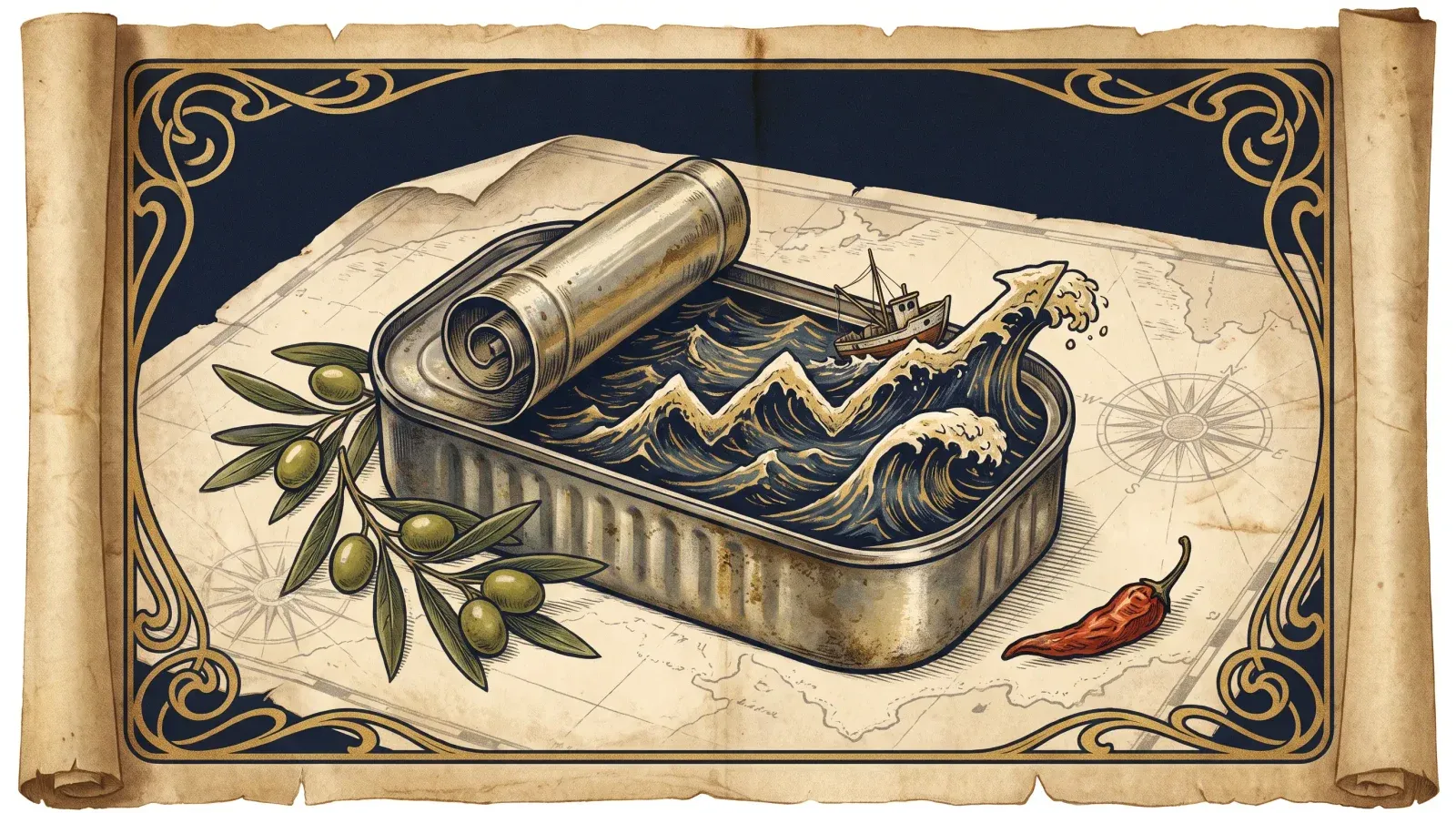
A tin of sardines is one of the great bargains in the human diet — a whole small fish, bones and all, complete protein and omega-3s, for pocket change. So why does it cost noticeably more than it did a few years ago, and why has the olive oil so many of us grew up with quietly turned into "vegetable oil"? The answer is not one story but three, stacked on top of each other: a historic olive-oil price shock, a genuine sardine supply crunch, and a demand boom. Underneath all of it sits a bigger question — how healthy are the oceans, really — and one of nature's most spectacular events, the Great Sardine Run, that may be quietly fading.
1. The oil in the tin: a once-in-a-generation olive-oil shock
Start with the change you can taste. For decades, sardines from Portugal, Spain, Morocco and beyond came packed in olive oil almost by default. Then, roughly between 2022 and 2024, olive oil went through the worst price crisis in modern history.
The cause was climate, not fish. Spain produces close to half the world's olive oil, and back-to-back years of extreme drought and record heat cut its harvest by around half two seasons running. Global olive-oil prices roughly doubled — in some markets tripled — reaching all-time highs, to the point that thieves began stealing tankers of it and commentators nicknamed it "liquid gold."
Global News explains the olive-oil price shock behind the switch to vegetable oil.
For a cannery, the packing oil is a meaningful slice of the cost of every tin. When olive oil suddenly costs two to three times more, a packer has two choices: raise the shelf price, or switch to a cheaper oil — sunflower, soybean or generic "vegetable oil" — to protect that price point. Many chose the second. That is why tins you remember as olive-oil now read "vegetable oil," and it is felt most sharply in lower-income markets, where shoppers are more price-sensitive and retailers stock the cheaper recipe. In wealthier markets, olive-oil versions never fully disappeared from the shelf; elsewhere they became hard to find at all. It is the same brand, re-formulated for a different wallet.
The good news: this part is already easing. The 2024/25 and 2025/26 olive harvests recovered strongly and olive-oil prices have fallen well back from their peak. Olive-oil tins are returning — but brands that re-tooled around a cheaper recipe are often slow to switch back, so the shelf will lag the harvest by a while. If your tin still says vegetable oil, that is often inertia now, not scarcity.
2. The fish in the tin: a real supply crunch, not just hype
Here is the part that surprises people. Even setting the oil aside, the sardines themselves have become dearer and scarcer — and your instinct that "there seem to be fewer" is backed by the numbers.
Off Northwest Africa — the rich upwelling waters that feed Morocco's enormous canning industry and much of the world's sardine supply — catches fell about 34% in four years. Morocco's sardine landings dropped from roughly 1.2 million tonnes in 2020 to about 700,000 tonnes in 2024. Scientists attribute the slide to a combination of overfishing and a warming, shifting ocean that is pushing the fish around.
It became serious enough that in early 2026 Morocco — one of the planet's largest sardine exporters — moved to halt frozen sardine exports to keep the fish available and affordable for its own citizens. When a top exporter starts protecting its home supply, every importing country feels it as higher prices and thinner shelves. A tin now carries a dearer oil and a dearer, scarcer fish.
And yes — demand really did boom
The third pressure is the happy one: sardines got fashionable. The "tinned fish" revival — elegant conservas on restaurant menus, "tin-fish date night," a whole aesthetic online — pulled a flood of new buyers toward a product whose supply was tightening at exactly the same moment. More demand chasing less fish is a textbook recipe for higher prices. Popularity is real, but it is the accelerant on top of the supply crunch, not the main fire.
Update, mid-2026: the ban bit harder than anyone expected
When we first published this piece, Morocco's frozen-sardine export ban was an announcement. As of this update it's a reality with teeth — and it explains a good chunk of what you're seeing on tin prices this year.
The ban took effect on February 1, 2026, with Rabat citing declining catches and the need to prioritize domestic supply. The problem for Europe's canners is arithmetic: Morocco supplies roughly 90% of the frozen sardine used by Galicia's canneries, and in January–October 2025 alone Spain imported some 27,400 tonnes of Moroccan frozen sardine — between 64% and 94% of all Spanish sardine imports depending on the month. When that pipeline shut, Spain's canning heartland was left leaning on the Iberian catch — in the same year its sardine quota was cut another 2.8%, to just under 16,850 tonnes, a number the industry protested as below what scientific advice would have allowed.
The result has been close to a political crisis in Galicia: the regional parliament passed a motion pressing Madrid to negotiate with Rabat, industry groups from Anfaco to the fishermen's guilds registered "profound disappointment" over the quota, and canners have warned openly of a raw-material shortage for the 2026 season. The ban is expected to hold for at least a year.
What this means in the tin aisle is what this whole piece has argued: sardine prices aren't drifting up because of branding — they track a genuinely tightening supply of a wild fish. When 90% of a region's raw material disappears by decree, the price of what remains does what prices do.
Sources for this update: Morocco World News (Mar 2026), Undercurrent News (Jan 2026), SeafoodSource, Mundolatas (2026 Iberian sardine allocation warning).
Update, August 2026: Spain's fleet stops mid-season
Spain's northern purse-seine fleet stopped sardine fishing on 1 August, its 2026 quota exhausted at the height of the season, leaving Portugal to fish the Iberian peak alone. A supply squeeze at peak-fat season is exactly the mechanism this page describes: fewer fresh landings now means tighter cannery supply and firmer tin prices into 2027.
3. So — are the oceans healthy? The deeper answer
This is the question that matters most, and it deserves more than a slogan. The truthful answer is layered, because sardines are an unusual fish.
Globally, the picture is genuinely mixed. In the most detailed assessment to date, the UN's Food and Agriculture Organization found that about 64.5% of assessed marine fish stocks are fished within sustainable limits — and 35.5% are overfished. In other words, roughly a third of the stocks we've studied are being taken faster than they can replace themselves. That is a real problem, but it is not "the oceans are empty."
Sardines sit at a fascinating intersection. On one hand they are among the most resilient fish we eat: they feed low on the food chain on plankton, mature young, and reproduce fast, so a healthy stock can rebuild quickly. On the other hand, sardine populations are famous for natural boom-and-bust cycles that swing over decades with ocean-temperature shifts — entirely apart from human activity. California's legendary sardine collapse emptied Cannery Row in the mid-20th century; the US Pacific sardine fishery has sat under a catch moratorium for years while the stock rides out a natural low.
The nuance that most "sustainability" takes miss: the current sardine squeeze is both a natural down-cycle and a human-and-climate one. Warming seas, marine heatwaves and overfishing are landing on top of a species that already rises and falls on its own rhythm — deepening the troughs and making recovery less predictable. So "are sardines sustainable?" has no single yes/no answer. It is stock-by-stock, year-by-year. We break down what to look for on the label here.
4. The Great Sardine Run — nature's most spectacular case
Nowhere is the "boom, bust and climate" story more dramatic than off the east coast of South Africa, in the event divers call the greatest shoal on Earth. Each austral winter, billions of sardines pour up the coast in shoals kilometres long, trailed by a feeding frenzy of dolphins, sharks, whales and diving gannets. It is one of the largest animal migrations on the planet.
The Great Sardine Run, filmed for Nature on PBS — the feeding frenzy that follows the shoals.
But is it still the same? Not quite — and the science here is genuinely surprising. The run is already fragile: researchers estimate only about 10% of South Africa's sardines take part, and in some years the run barely materialises at all. A landmark study in Science Advances argued the run is essentially an ecological trap: these are cool-water, Atlantic-adapted sardines that follow a narrow tongue of cold water up the east coast, mistaking it for their home range, and swim straight into warm Indian-Ocean waters where predators are waiting. It may be a leftover instinct from a colder, ice-age ocean.
The twist: because the whole event depends on that cold-water corridor, a warming ocean is expected to make the run fizzle out over time. And — counterintuitively — scientists note this might actually be better for the sardines, since fewer would swim into the trap. So a declining sardine run is not a simple "the stocks are dying" signal. It is a specific migration that climate change may switch off, which is a different phenomenon entirely from the supply crunch off Morocco. Two very different sardine stories, both being rewritten by the same warming sea.
Putting it together: why the humble tin got dearer
| Pressure | What happened | Direction now |
|---|---|---|
| Olive-oil shock | Drought halved Spain's harvest; prices doubled–tripled; canners switched to vegetable oil | Easing — harvests & prices recovering |
| Sardine supply crunch | NW Africa catches −34% in 4 yrs; Morocco landings 1.2M→0.7M tonnes; export curbs | Worsening — now export-restricted |
| Demand boom | Tinned-fish revival pulled in new buyers as supply tightened | Still rising |
| Ocean health | ~35% of assessed stocks overfished; warming seas + natural cycles compounding | Long-term concern |
The next time a tin costs more than you remember, it is carrying the weight of all four at once: a climate-driven oil crisis, a real decline in the fish, a wave of new demand, and a warming ocean reshaping where sardines live and migrate. The bargain is still extraordinary — few foods deliver this much nutrition, this sustainably, for the price. But the humble tin is quietly telling us a very big story about the sea.
Sources & further reading
- CNBC — "'Liquid gold': An olive oil shortage is fueling record prices"
- BBC — "Olive oil price skyrockets as Spanish drought bites"
- Certified Origins — Olive Oil Market Report, January 2026 (price recovery)
- ICSF — "Sardine stocks off Northwest Africa fall 34% amid overfishing and climate strain"
- SeafoodSource — "Morocco indefinitely bans export of frozen sardines"
- FAO — Most detailed global assessment of marine fish stocks (64.5% sustainable / 35.5% overfished)
- Science Advances — "The sardine run in southeastern Africa is a mass migration into an ecological trap"
- Scientific American — "Mystery of Doomed Sardine Migration Is Finally Solved"