 Sardines
The Pilchard Cans With No Pilchards In Them
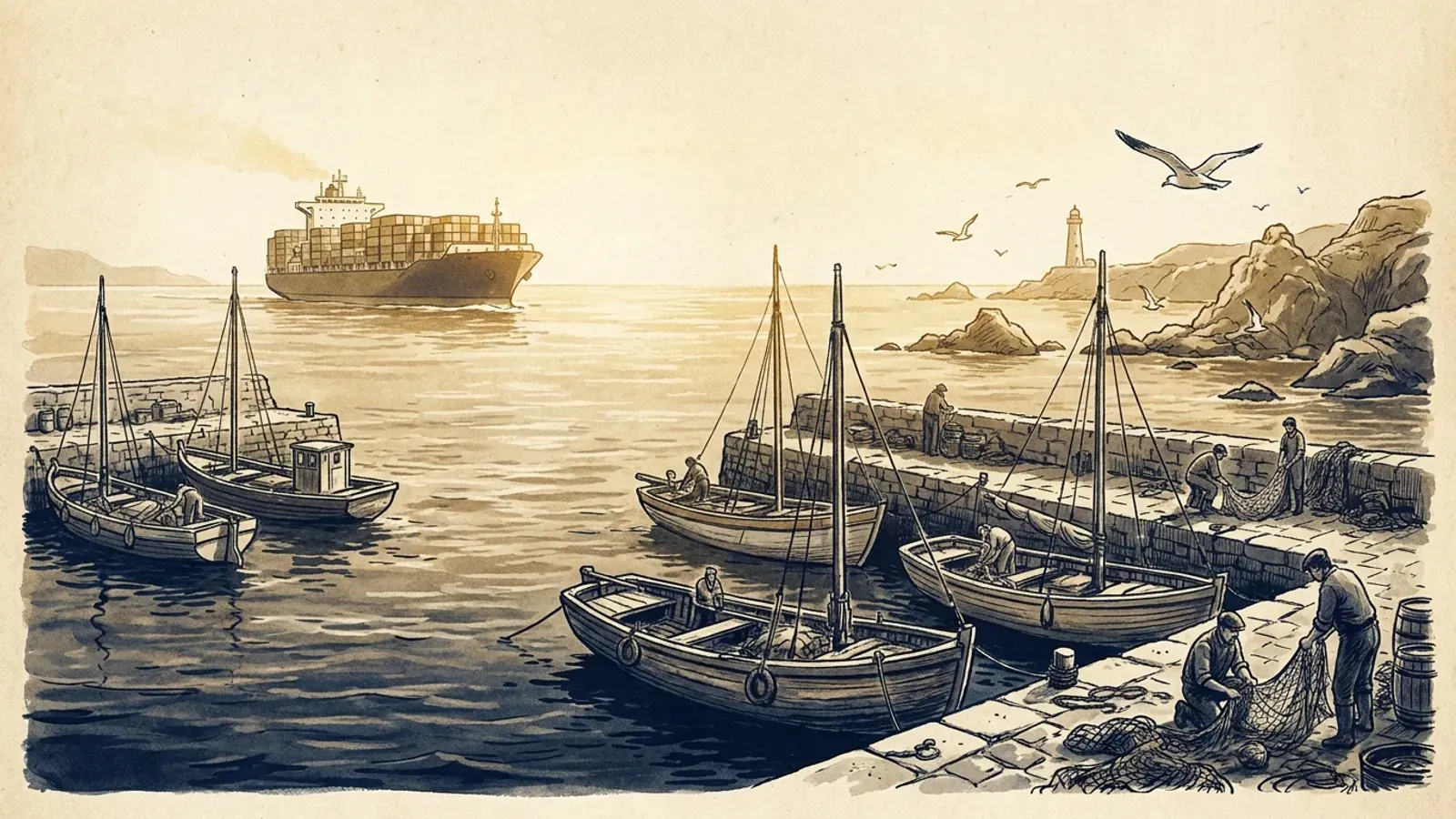
In South Africa, the pilchard can is not a pantry item. It's an institution. Lucky Star — the red-and-blue tin of pilchards in tomato sauce — sits somewhere between a brand and a national dish. Four-hundred-gram oval cans, curried or chakalaka'd or straight over pap, in millions of homes. Here's what the label says about the fish inside: "pilchards (fish)." That's it. And there's a reason it doesn't say more.
The fish that left
The South African pilchard is Sardinops sagax — the same genus as the Pacific sardines of Japan, Mexico, and California, a true sardine by any standard. Through the mid-20th century, the Benguela Current fishery off South Africa and Namibia was one of the richest small-fish grounds on Earth. St Helena Bay and Walvis Bay canned it by the hundreds of millions of tins.
Then the stock collapsed. Namibia's pilchard fishery fell so far the government imposed a total moratorium in 2018 — zero commercial catch, still in force. South Africa's quota shrank until, in recent seasons, the entire allowed national catch could be landed and canned with months of factory capacity to spare.
But the cans didn't leave the shelves. The demand was still there. So the fish started arriving frozen — from the other side of the world.
What's in the tin now
In May 2026, Oceana Group's CEO confirmed publicly that about 80% of the raw fish in Lucky Star cans is sourced outside South Africa. Oceana itself describes the company as the world's largest buyer of frozen pilchards. Much of that fish is Sardina pilchardus — the European sardine, largely from Morocco, the same species in a premium Portuguese tin — shipped frozen to the Western Cape, thawed, and canned as South African-style pilchards. Sourcing from Thailand has also been reported, which would mean a Sardinella species: a third fish under the same word.
None of this is illegal, and none of it is hidden exactly — it's just invisible at the shelf. "Pilchards (fish)" covers all of it. The can's identity stayed South African. The fish became global.
Namibia's version of the story is starker. With its own pilchard under moratorium, Walvis Bay canneries keep the lines running on imported frozen pilchards — and on horse mackerel, canned in tomato sauce as "maasbanker," the pilchard's understudy in a market that still wants that oval can. One company even revived a beloved old pilchard brand name, Princess, on cans of horse mackerel.
Why we're telling you this
Not to knock Lucky Star — feeding a country is not a scandal, and imported fish kept thousands of cannery jobs alive through a stock collapse. We're telling you because this site's whole premise is that the word "sardine" (and its cousin "pilchard") hides a dozen different fish, and this is the biggest example on Earth: a national icon whose species quietly changed underneath it.
When the label says "pilchards (fish)," the straight answer to "which fish?" is: it depends on the shipment.
The collector's footnote
If you want to taste what the original Benguela pilchard was, your best proxies today are Pacific Sardinops tins — Mexican sardina Monterrey or Japanese ma-iwashi. And if the Namibian stock ever recovers enough for the moratorium to lift, a genuine Walvis Bay pilchard tin would be one of the great comeback stories in canned fish.
The can's identity stayed South African. The fish became global.
Sources
- News24 — interview with Oceana Group's CEO, May 2026 (the ~80% imported figure)
- Oceana Group corporate materials — described as "the world's largest procurer of frozen pilchards"
- IOL Business Report, 2016 — import substitution during quota shortfalls
- The Namibian — moratorium coverage, biomass survey, and bycatch-dispute reporting
- Etosha Fishing (Efuta) — official statements on frozen-pilchard imports and horse-mackerel ("maasbanker") canning
- Sardines.World — our own species and directory research on Sardinops sagax
Frequently asked questions
Is Lucky Star made from South African fish?
Mostly not anymore. The company's CEO confirmed in 2026 that about 80% of the raw fish is sourced outside South Africa, much of it frozen pilchards from Morocco and elsewhere, canned in the Western Cape.
What species is in a South African pilchard can?
The label says only "pilchards (fish)." Depending on the shipment it may be local Sardinops sagax, imported European sardine (Sardina pilchardus), or other sardine-type species — the label does not distinguish.
Are pilchards and sardines the same thing?
"Pilchard" traditionally means a larger/adult sardine; both words cover several species. South Africa's native pilchard is Sardinops sagax, a true sardine genus.
Why is Namibia's pilchard fishery closed?
The stock collapsed after decades of heavy fishing and environmental shifts; Namibia imposed a full moratorium in 2018 that remains in force, though recent surveys and bycatch disputes keep the recovery debate alive.