 Sardines
A Short History of the Sardine: From Napoleon's Tins to the TikTok Revival
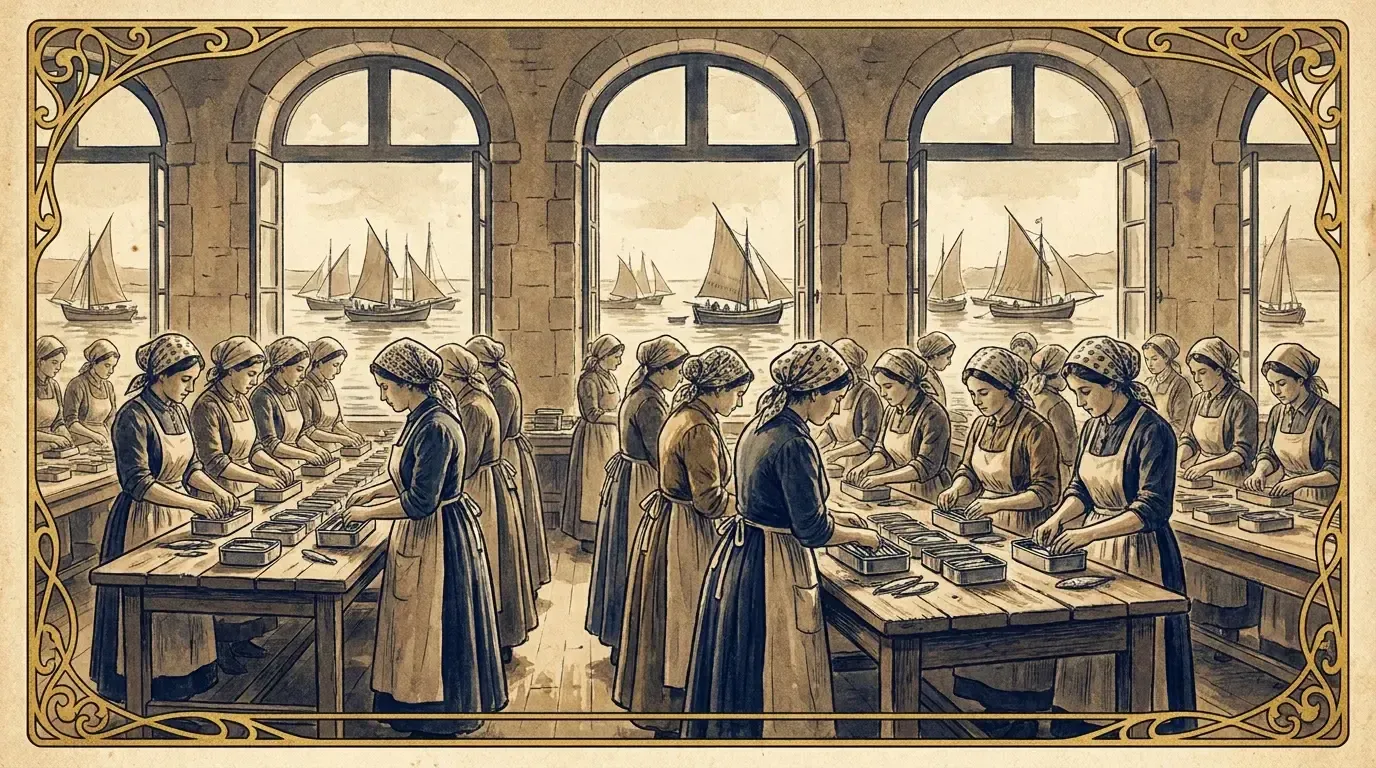
Few foods have shaped coastlines the way the sardine has. It fed Roman garrisons and Napoleonic armies, built entire towns in Brittany, Portugal and California, gave literature Cannery Row, gave design history its most collectible labels — and then, after half a century as a punchline, became cool again. This is the story of the world's greatest small fish.
The short version first: 70 million years in 45 seconds — the sardine was schooling before the asteroid, and it is still here.
Antiquity: a fish named for an island
The name almost certainly comes from Sardinia, whose waters teemed with the small silver fish the Greeks called sardinai. Salted and packed in amphorae, sardines and their cousins were protein infrastructure for the ancient Mediterranean — cheap, abundant, and storable, the fish of soldiers, sailors and cities.
1809: Napoleon needs preserved food
Modern sardine history begins with a prize. France's revolutionary government offered 12,000 francs to anyone who could preserve food for armies on the march; confectioner Nicolas Appert won it in 1809 with heat-sealed preservation, and the tin can followed within years. Brittany's fishing ports — Nantes, Douarnenez, Concarneau — realized their oily little fish was the perfect candidate: by the 1820s–30s, sardines had become one of the first foods ever canned commercially, packed in olive oil by hand exactly as the finest houses still do today.
The Golden Age: label art and cannery towns
Through the late 1800s, canning exploded down the Atlantic coast into Spain and Portugal. Matosinhos and Setúbal became cannery towns where generations of women — the conserveiras — hand-packed fish at long tables. Competition bred beauty: lithographed tin labels became miniature posters, art nouveau borders, heraldic fish, gold foil — the visual language our own brand borrows deliberately. Lisbon's specialty shops still wrap tins in printed paper like small gifts, and collectors trade vintage labels like stamps.
Cannery Row: boom, Steinbeck, bust
California's sardine rush made Monterey the "Sardine Capital of the World" — in peak years the fleet landed hundreds of thousands of tons, and John Steinbeck fixed the street of canneries in literature in Cannery Row (1945). Then the stock crashed — overfishing colliding with a natural downswing — and by mid-century the industry was gone. It remains the sardine's great cautionary tale, and the reason modern quota management matters.
The lean decades
Postwar abundance made tinned fish a symbol of scarcity in much of the world — student food, bomb-shelter food, the punchline "packed like sardines." Yet in Portugal, Spain and France the craft survived quietly: the same families, the same hand-packing, tins aged in cellars like wine, waiting for the world to come back around.
The revival: tinned fish gets cool
It came back around. Lisbon's conserveira shops became tourist pilgrimage sites; chefs put conservas on menus; new-wave brands like Fishwife made tins Instagram-beautiful; and "tinned fish date night" took over TikTok. The sardine entered its third century as what it was in its first golden age — an affordable luxury with a beautiful label. The difference now: we know the fish is a nutritional cheat code and one of the most sustainable proteins on earth.
Taste the history: the canneries in this story are still packing. Pinhais (est. 1920) makes our world No. 1 tin; Connétable (est. 1853) is the oldest sardine cannery on earth — both are in the world rankings.
Frequently asked questions
Where does the word sardine come from?
Most likely from Sardinia, the Mediterranean island around whose waters the fish once teemed — the ancient Greeks called them sardinai.
When were canned sardines invented?
After Nicolas Appert's 1809 preservation breakthrough in Napoleonic France; Brittany's ports were canning sardines commercially by the 1820s–30s — among the first foods ever tinned.
What happened to Cannery Row?
Monterey's sardine stock crashed mid-century under heavy fishing and ocean cycles; the canneries closed, and Steinbeck's street is now shops and the Monterey Bay Aquarium.