 Sardines
Sardines vs. Mackerel: Which Tinned Fish Wins?
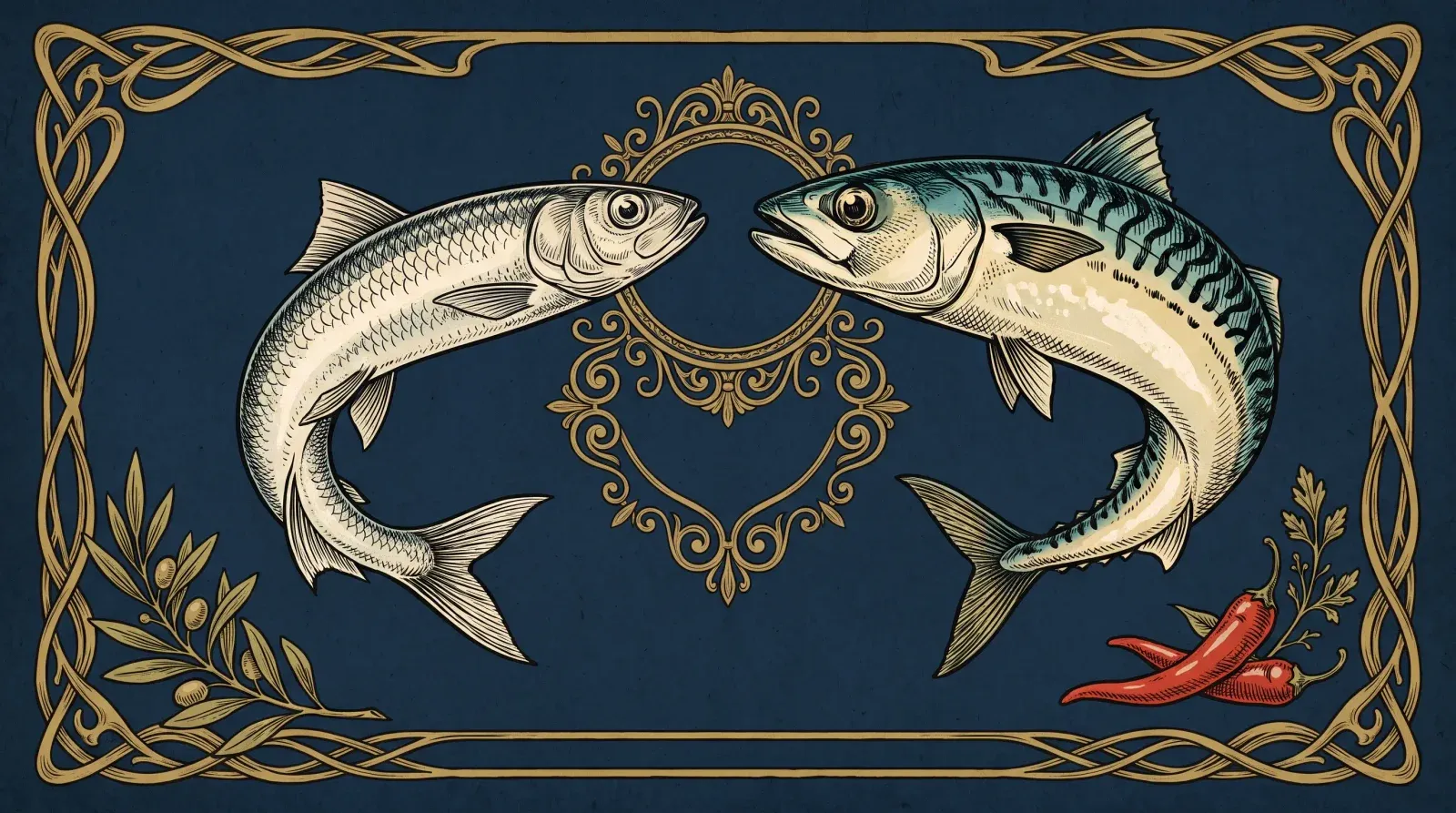
Here's the straight answer before the details: nobody loses this fight. Sardines and mackerel are the two great oily tinned fish, both loaded with omega-3s and protein for pocket change. They simply win different rounds — mackerel takes raw omega-3, vitamin D and B12; sardines take calcium, mercury safety, and, right now, sustainability. Which tin is "better" comes down to what you want from it.
The scorecard
Figures are for a typical tin-sized serving of Atlantic mackerel vs sardines. Winner of each row in red.
| Per serving | Sardines | Mackerel |
|---|---|---|
| Omega-3 (EPA+DHA) | ~1,500 mg | ~2,200 mg |
| Calcium (bones-in) | ~350 mg | ~14 mg |
| Vitamin D | ~165 IU | ~400 IU |
| Vitamin B12 | ~8 mcg | ~16 mcg |
| Protein | ~22 g | ~21 g |
| Mercury | Very low | Low |
| Sustainability (2026) | Stock-by-stock, best tins strong | NE Atlantic overfished |
Round 1 — Nutrition: mackerel hits harder, sardines cover more bases
If your single goal is the biggest omega-3 dose per tin, mackerel wins clearly — around 2,200mg of EPA+DHA versus roughly 1,500mg for sardines, about 47% more. Mackerel also carries more than double the vitamin D and twice the B12. It is, gram for gram, the more concentrated oily fish, which is exactly why it tastes richer (more on that below).
But sardines answer with the one thing mackerel can't match: calcium. Because you eat sardines bones and all, a tin delivers roughly 350mg of calcium — about a quarter of your day — against a trivial 14mg for skinless, boneless mackerel fillets. For anyone eating fish partly for bone health, that single row flips the whole contest. Protein is essentially a tie.
Round 2 — Mercury, and the mackerel trap most guides miss
Both fish are safe, but there's a subtlety worth knowing. Sardines sit at the very bottom of the food chain — small, short-lived, plankton-eating — so they accumulate almost no mercury and rate "very low." Atlantic mackerel rates "low," a notch behind but still firmly in the safe zone.
The trap: "mackerel" is not one fish. The mackerel in your tin is almost always Atlantic mackerel — low mercury, eat freely. But king mackerel is a large, long-lived predator that is genuinely high in mercury and appears on "avoid" lists for pregnant women and young children. King mackerel is sold fresh as steaks, not canned — so the scary headline you may have read does not apply to the tin in your cupboard. If it's tinned, it's the safe kind.
Round 3 — Sustainability: sardines are ahead right now
This is where the gap has widened lately. In April 2025 the UK's Marine Conservation Society downgraded Northeast Atlantic mackerel to 4 out of 5 — "not recommended" — on its Good Fish Guide. The reason isn't the fish's biology but political failure: Norway, Iceland, the Faroe Islands and the UK all fish the same stock, and between 2020 and 2024 total catch limits ran about 39% above scientific advice, with actual catches some 23% over, because no unified management plan exists to hold everyone to the science.
Sardines aren't automatically perfect — as we cover elsewhere, sardine stocks swing naturally and some are under real pressure — but sustainability is judged stock-by-stock, and the best-managed sardine tins (look for the MSC blue label) currently rate well ahead of overfished NE Atlantic mackerel. If a clean conscience per tin matters most to you, sardines have the edge in 2026.
Round 4 — Taste & kitchen
Mackerel is the bolder fish: oilier, richer, more assertively "fishy," which makes it superb for pâtés, on hot toast with mustard, or flaked into a punchy salad — but it can overwhelm delicate dishes. Sardines are milder and more versatile: happy straight from the tin, on crackers, in pasta, on pizza, or mashed into fishcakes. If you're new to oily fish, sardines are the gentler on-ramp; if you already love the flavour, mackerel rewards you with more of it.
The verdict
Choose mackerel to maximise omega-3, vitamin D and B12, and if you love a rich, robust flavour. Choose sardines for bone-building calcium, the lowest possible mercury, the most reliably sustainable tin, and everyday versatility. The best answer is to keep both in the cupboard — but if you're stocking one, sardines cover the widest range of needs. See where the best tins land in our full sardine ranking.
Sources
- Marine Conservation Society — Good Fish Guide, mackerel rating (April 2025 downgrade to 4 — "not recommended")
- SeafoodSource — "MCS mackerel rating downgrade" (catches 23% over advice, 2020–2024)
- NOAA Fisheries — Atlantic Mackerel species profile
- FDA/EPA — Advice About Eating Fish (king mackerel high-mercury; Atlantic mackerel & sardines best choices)