 Sardines
Sardines for Dogs: The Complete Owner's Guide
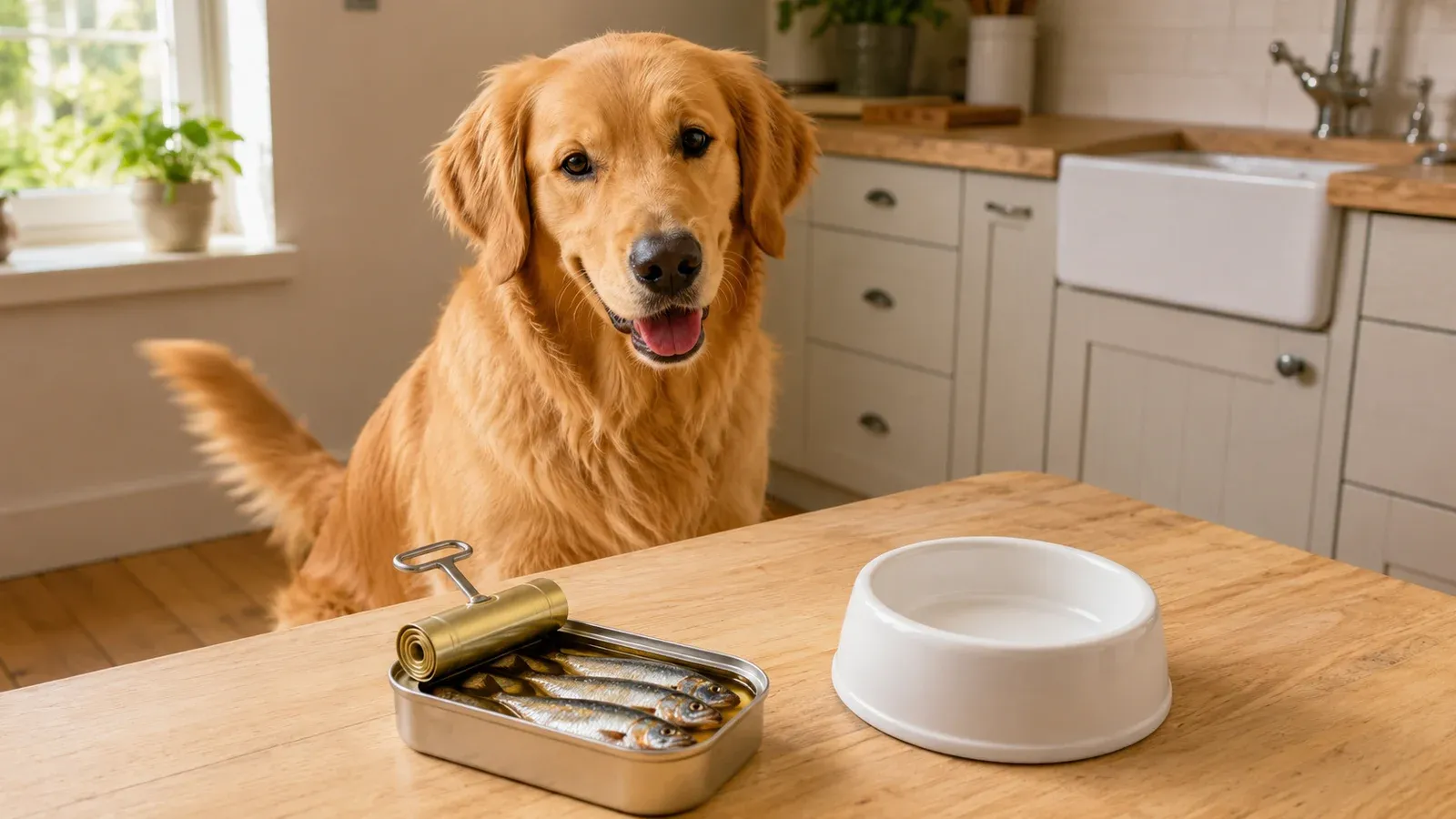
Somewhere between the fifteenth tin you've opened for yourself and the pair of eyes tracking it across the kitchen, every sardine lover asks the same question: can I share this? The answer is a warm yes — sardines are one of the best human foods a dog can eat, and one of the few where the cheap tin is actually the right tin. But the details matter: which packing, how much, and for which dogs. This is the complete version of the answer, drawn from veterinary sources.
Short version: sardines packed in water with no added salt are the dog-safe tin. Skip oil, brine, and every sauce. Canned bones are soft and fine for most dogs (they're the calcium). Keep portions inside the 10%-of-calories treat rule — roughly ¼ tin for a small dog, ½ for a medium, up to a full tin for a big dog, a few times a week. Not for dogs with pancreatitis or on sodium-restricted diets without a vet's OK.
Why sardines are so good for dogs
The case for sardines rests on the same things that make them a human superfood — but several of them matter more for dogs.
Omega-3s (EPA and DHA) are the headline. Veterinary sources credit fish-derived omega-3s with reduced itching and better skin and coat in allergic dogs, more comfort and agility in arthritic dogs, protective effects for heart and kidneys, and — in a 2012 study on DHA supplementation — measurably better learning and retention in puppies. A typical tin delivers roughly a gram of EPA+DHA per 100 grams of fish: a meaningful food-level dose, straight from the source dogs' bodies use best.
The whole-fish package. Beyond the omega-3s, a sardine brings complete protein, vitamin D (which dogs, unlike us, can't make from sunshine), vitamin B12, selenium, and — because you're feeding the whole fish, soft bones included — real calcium and phosphorus.
Almost no mercury. Sardines sit near the bottom of the food chain, eating plankton and living fast. They don't have time to accumulate the mercury that makes big predatory fish a concern. For a treat you'll feed regularly, that matters.
No thiaminase worries — because the tin is cooked. Raw fish can contain thiaminase, an enzyme that destroys vitamin B1 and can cause a serious deficiency in dogs fed raw fish routinely. Cooking deactivates it — and canned sardines are cooked in the tin. One more point for the humble can.
The golden rules
Rule one: water, no salt added. This is the whole game. Sardines packed in spring water with no added salt give the fish and nothing else. Regular water-packed tins are acceptable; the no-salt-added versions are better. Read the label — sodium is the number to minimize.
Rule two: skip oil, brine, and every sauce. Olive oil isn't toxic, but it layers extra fat and calories onto an already-rich fish — the last thing an overweight or pancreatitis-prone dog needs. Brine is salt water by definition and the worst offender. Tomato, mustard, hot, and "flavored" sauces bring salt and seasonings, and sauces like these can include onion or garlic — both genuinely toxic to dogs. If an oil-packed tin is all you have, drain it, rinse it, and serve less.
Rule three: the bones are a feature, for most dogs. The canning process cooks a sardine's tiny bones to softness — most veterinary sources consider them safe to eat and they carry much of the fish's calcium. (You eat them without noticing; so does your dog.) Two caveats: a minority of vets prefer caution, and common sense agrees with them for toy breeds and dogs who inhale food — for those, mash the fish with a fork and the soft bones disappear into the flesh. Fresh sardines are a different matter: if you cook fresh fish for your dog, debone it.
Rule four: it's a treat, not a diet. Vets are consistent on this: treats and toppers of every kind should stay within about 10% of a dog's daily calories, with the other 90% coming from a complete, balanced dog food. A tin of sardines in water runs roughly 150–190 calories, which is exactly why the portion table below looks the way it does. And sardines are a food, not a medical treatment — if your vet has prescribed a therapeutic omega-3 dose for arthritis or skin disease, a supplement delivers concentrations a tin can't match. Sardines are the everyday version.
The best sardines for dogs
Everything above collapses into a simple shopping brief: wild-caught whole sardines, packed in water, lowest sodium you can find, no flavorings. Conveniently, these are among the cheapest tins in the store. Our picks:
Season Brand in water — the everyday default
The same reliable, widely available tin we recommend to humans on a budget, in its water-packed form. Look for the no-salt-added version.
Where to buy Season BrandWild Planet wild sardines in water, no salt added — the premium pick
The cleanest label in the category: wild-caught, water-packed, nothing added. Usually a little dearer, still cheap by dog-treat standards.
Where to buy Wild PlanetCrown Prince in water — the low-sodium workhorse
Crown Prince's water-packed line (they offer a no-salt-added version too) is mild, soft, and easy to mash for small dogs.
Where to buy Crown PrinceBeach Cliff / Brunswick in water — the pantry-stocker
The classic ultra-cheap American and Canadian tins, in their plain water form. Perfect for keeping a dedicated "dog shelf" stocked. Check labels — these lines come in many sauces, and only the plain water tins are for the dog.
Where to buy Beach CliffLeave on the shelf (for the dog): anything in brine, tomato sauce, mustard, hot sauce, or "lightly smoked"; skinless-and-boneless tins (more money, less calcium); and the beautiful olive-oil tins — those are yours.
How much? A feeding guide
The answer is "it depends on your dog's size, weight, and what else they eat" — but the 10% treat rule plus a standard 90–125g tin gives sensible starting points:
| Dog size | Example weight | Sardines (water-packed) | How often |
|---|---|---|---|
| Toy / small | up to ~10 kg / 22 lb | ¼ tin (1–2 small fish), mashed | 1–2× a week |
| Medium | ~10–25 kg / 22–55 lb | ½ tin (2–3 fish) | 2–3× a week |
| Large | ~25–40 kg / 55–90 lb | up to 1 tin | 2–3× a week |
| Giant | over 40 kg / 90 lb | 1 tin | up to 3× a week |
Three notes that matter more than the table. Start smaller than this the first week — a single fish, watch the stomach, work up. Count the calories — if sardine day is also training-treat day, something has to give. And these are healthy-dog numbers — for puppies, seniors, and dogs with any medical condition, ask your vet first.
Six good ways to serve them
- The topper — the classic. Fish on kibble, mashed in. Reluctant eaters become enthusiastic eaters.
- The enrichment filler — half a mashed sardine in a Kong, frozen. Twenty minutes of blissful work.
- Training gold — tiny flakes of sardine outrank almost any commercial treat for high-stakes recall practice.
- The summer cube — mash with a little water, freeze in an ice-cube tray. One cube = one hot-day treat.
- The egg-and-fish scramble — an occasional weekend breakfast for the dog who has everything (plain, no seasoning).
- The medicine smuggler — a pill pressed into a sardine disappears without negotiation.
When sardines are the wrong treat
Skip sardines — or clear them with your vet first — if your dog: has pancreatitis or a history of it (the fat is the problem); is on a sodium-restricted diet for heart or kidney disease; is significantly overweight (calories add up fast); or has a known fish allergy — rare, but real, showing up as itching or digestive upset. And if the first sardine ever produces vomiting or diarrhea, that particular experiment is over; not every stomach agrees with rich fish.
The verdict
Few things you already have in your cupboard can do as much for a dog as a plain tin of sardines in water: skin, coat, joints, heart, brain — for about a dollar, with the bones thrown in free as a calcium supplement. Buy the cheap water-packed tins by the flat, keep the olive-oil beauties for yourself, respect the 10% rule, and you and the dog can share the world's best pantry staple for years.
This guide is editorial, based on published veterinary sources, and isn't a substitute for advice from your own vet — especially for dogs with health conditions.
Sources & further reading
- PetMD — Fish Oil for Dogs: benefits, conditions, cautions
- Great Pet Care (Sarah Lynn Wallace DVM, rev. Brittany Kleszynski DVM) — Can Dogs Eat Sardines?
- Pooch & Mutt (rev. Dr. Linda Simon MVB MRCVS) — Can dogs eat sardines?
- Kip & Twiggy's (Dr. Emma Chandley BVetMed PGCertSAS MRCVS) — A Guide to Sardines for Dogs
- Dogster (vet-verified) — Can Dogs Eat Sardines? Nutrition, Types & Preparation
Frequently asked questions
Can dogs eat sardines in olive oil?
It's not toxic, but it's not ideal. The extra oil adds fat and calories dogs don't need, and too much fat is a pancreatitis risk for prone dogs. If a tin in olive oil is all you have, drain and rinse it well and serve a smaller portion. For regular feeding, choose sardines packed in water with no salt added.
Can dogs eat sardines with bones?
For canned sardines, yes — the canning process cooks the tiny bones soft, and they're exactly where much of the calcium lives. Most vets consider them safe as-is; if you have a very small dog or a gulper, mash the sardine with a fork so the soft bones break up. Fresh (uncooked or home-cooked) sardines are different: debone those.
Can dogs eat sardines every day?
It's better not to. Sardines are rich, and like any treat they should stay within about 10% of your dog's daily calories. Most veterinary guidance lands on a few times a week rather than daily. Daily fish also crowds out the balance of a complete dog food.
Can dogs eat sardines in tomato sauce, mustard, or brine?
Skip all three. Brine is heavily salted — a real sodium risk for dogs. Tomato and mustard sauces bring salt and seasonings, and sauces of this kind can include onion or garlic, which are toxic to dogs. Water-packed, no-salt-added tins are the safe default.
How many sardines can I give my dog?
As a treat within the 10% rule: very roughly a quarter of a standard tin for a small dog, half a tin for a medium dog, and up to a full tin for a large dog — a few times a week, not daily. Start with less the first time and watch how your dog's stomach handles it. Ask your vet if your dog has any health conditions.