 Sardines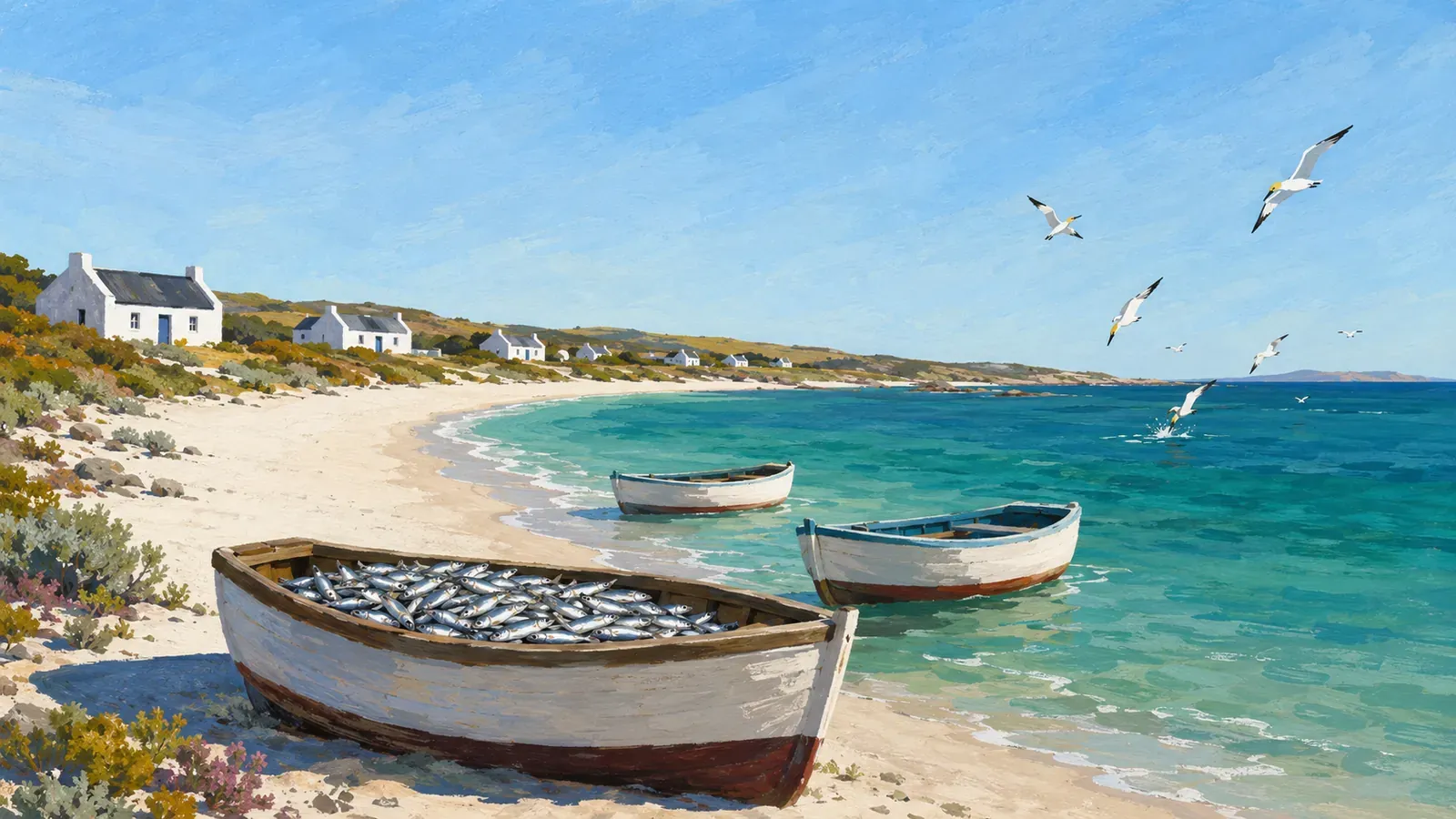
Lucky Star
South Africa's dominant canned-pilchard brand — the 400g can of pilchards in tomato sauce is a national staple protein. Owned by JSE-listed Oceana Group, canned at St Helena Bay and Laaiplek on the West Coast (with contract canning at Etosha Fishing in Walvis Bay, Namibia). The label says only 'pilchards (fish)': with the local Sardinops sagax resource depleted, Oceana's CEO has confirmed roughly 80% of Lucky Star's raw fish is now sourced outside South Africa.
At a glance
| Country | South Africa |
|---|---|
| Region | Western Cape |
| City | St Helena Bay |
| Founded | 1959 Brand acquired in 1955 by Federal Fish Packers and renamed Lucky Star in 1959, the same year the first Pilchards in Tomato Sauce was launched; Oceana Group bought the brand in 1998. |
| Company | corporate |
| Price | $ — budget |
| Made at | Lucky Star Cannery — St Helena Bay, St Helena Bay |
| Owner | Oceana Group |
Notable facts
- Oceana's CEO confirmed (News24, May 2026) that around 80% of Lucky Star's raw fish is sourced outside South Africa; the exact percentage is single-sourced but directionally consistent with Oceana's own claim to be 'the world's largest procurer of frozen pilchards' and 2016 import reporting.
- South African can labels legally state only 'pilchards (fish)' with no Latin species name — the local catch is Sardinops sagax, but imported frozen fish (including Sardina pilchardus from Morocco, with Thailand also cited as a source in 2016) makes up the majority of raw material, so the species in any given can is variable.
- In 2016 the local pilchard quota met less than 50% of demand; Oceana imported frozen pilchards from Morocco and Thailand for processing at St Helena Bay and spent R10m upgrading the Laaiplek plant to handle frozen fish.
- In 2025-26 Oceana temporarily consolidated its canneries (Amawandle staff moved to St Helena Bay) after the full South African pilchard quota was caught out; promotions were suspended in May 2026 as supply tightened, while the CEO said the Namibian biomass was 'coming back strongly'.
- Historically the market leader with roughly 70%+ share of South African canned pilchards.
- Part of Lucky Star production is contract-canned by Etosha Fishing in Walvis Bay, Namibia.
Behind the tin
Lucky Star is packed at Lucky Star Cannery — St Helena Bay in St Helena Bay, South Africa.
contract of Lucky Star are packed at Etosha Fishing Cannery — Walvis Bay, Walvis Bay — not the brand's whole range.
Certain Lucky Star SKUs are packed at Lucky Star Cannery — Laaiplek, Laaiplek — not the brand's whole range.
primary of Lucky Star are packed at Lucky Star Cannery — St Helena Bay, St Helena Bay — not the brand's whole range.
The brand is owned by Oceana Group.
Products
Pilchards in Tomato Sauce
The flagship 400g can; also sold in smaller sizes. Species varies by sourcing: local Sardinops sagax when available, majority imported frozen fish including Sardina pilchardus from Morocco; label states only 'pilchards (fish)'.
Pilchards in Chilli Sauce
Chilli variant of the 400g staple can; same variable sourcing as the tomato-sauce can.
Sardines in Oil
120g sardine can; species not stated on label.
Sardines Peri-Peri
120g sardine can; species not stated on label.
Smoked Sardines
120g smoked sardine can; species not stated on label.
Sources
- Lucky Star brand timeline
- Oceana Group — Our Company
- IOL Business Report — Oceana imports pilchards to beat local shortage (2016)
- News24 — Lucky Star promotions on hold as fish supply tightens (May 2026)
- The Namibian — Oceana disputes Lucky Star closure
- Cultured Carp — What are we actually eating
- Open Food Facts — Lucky Star pilchards label
Compiled from public reporting and the brand's own materials.
Spot something we got wrong? Tell us.
Work with this brand? We'd love your corrections, official photos, or details —
get in touch.