 Sardines
The Sardines Came Back. The Canneries Didn't.
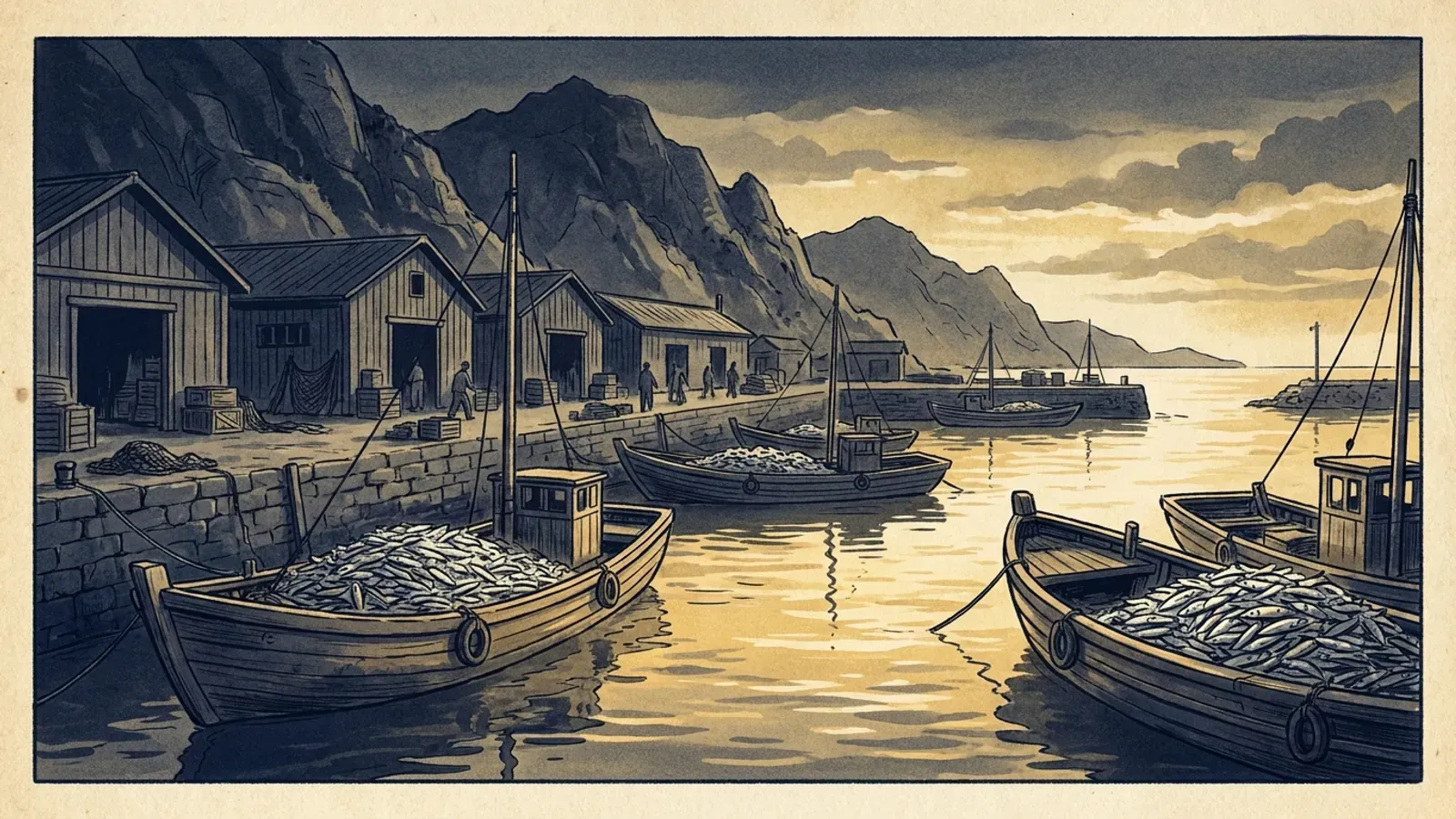
Walk the canned-fish aisle of any Korean supermarket and you'll find a wall of tins: mackerel, saury, tuna in a dozen sauces. What you will almost never find is a Korean sardine. It wasn't always this way. In the 1930s, the waters off Korea's east coast hosted one of the biggest sardine fisheries in the world.
The boom nobody remembers
During the Japanese colonial period, sardines — jeongeori (정어리) in Korean, the same Sardinops that fills Japanese cans — arrived off the Korean coast in almost absurd abundance. Ports like Sokcho and Guryongpo boomed. Much of the catch wasn't even eaten: sardine oil was rendered industrially, including for wartime use. It was a sardine economy built at colonial scale and speed.
Then, in the 1940s, the fish disappeared. Not declined — disappeared, in one of those brutal multi-decade swings that Sardinops populations are famous for across the Pacific (California's Cannery Row died the same way in the same era). The Korean industry collapsed with it. Sardines became so scarce that one nickname rendered them "gold sardines."
Rebuilding without the sardine
When Korea's canned-fish industry rebuilt after the war, it rebuilt around what the sea actually offered: mackerel, saury, and eventually distant-water tuna, which giants like Dongwon and Sajo turned into a national pantry category. Three generations of Korean eaters grew up with canned godeungeo and kkongchi. The sardine simply fell out of the country's food memory — a fish your great-grandparents' generation knew.
The exception proves the rule: in 2021, Sajo Daerim launched a canned sardine — the first mainstream attempt in living memory, marketed on EPA/omega-3 content. Today it's nearly impossible to find; delisted from major platforms, hanging on only in the company's own mall. One tin, swimming against eighty years of habit.
Then the fish came back
Here's the twist this story was waiting for: the sardines returned. Starting around 2022, large schools of sardines began appearing again off Korea's south coast — so many, in some episodes, that mass die-offs clogged bays near Masan and made national news. Fisheries scientists connect it to the same long-cycle population swings (and warming waters) that took the fish away in the first place.
So Korea now has sardines again — and effectively no sardine-canning industry, no consumer habit, and no brand ready to receive them. The fish outlived the market that was built on it.
Will anyone can them?
That's the question we'll keep watching. Japan next door shows what a mature Sardinops can culture looks like — kabayaki glazes, miso simmers, artisan oil sardines. Korea has the fish, the canning giants, and a health-food market that already buys omega-3 stories. Whether anyone connects those dots — or whether the sardines swing away again before they do — is one of the more interesting open questions in canned fish.
Empires rise and fall. The sardine outlasts them, on its own schedule.
Sources
- Hankookilbo — sardine history essay (colonial-era boom, industrial oil rendering)
- Joseilbo — coverage of Sajo Daerim's 2021 canned-sardine launch
- Danawa / Lotte iMall listings — evidence of the product's current marginality (delisting)
- Korean news coverage of the 2022 Masan Bay sardine die-offs
- Sardines.World — our own research on the Pacific Sardinops boom-and-bust cycle (cross-referenced with California's Cannery Row collapse)
Frequently asked questions
Can you buy Korean canned sardines?
Barely. Sajo Daerim launched one in 2021 but it's now marginal — Korea's canned-fish culture is built on mackerel, saury, and tuna. No major Korean brand currently runs a sardine line.
Why did Korea's sardines disappear?
Sardinops populations across the Pacific swing in decades-long boom-bust cycles tied to ocean conditions. The Korean/Japan Sea stock crashed in the 1940s — the same era California's sardine fishery collapsed.
Are sardines back in Korean waters now?
Yes — schools returned to the south coast from around 2022, including mass-die-off events near Masan that made national news. Whether a canning industry follows is an open question.